Dolomites Road Trip Itinerary: Our 5-Day Route Through the Alps
By the end of five days in the Dolomites, we'd hiked more than we had on any other trip and we still couldn't agree on a favourite view. Every pass and ridge seemed to reveal another mountain that looked too perfect to be real.
This Dolomites road trip itinerary is built from our own route, the hikes we did, the roads we drove, and the timing that made the difference between busy car parks and having a place almost to ourselves.
Five days is enough to cover the highlights of the Dolomites without feeling rushed, Seceda or Alpe di Siusi, the Sella Pass, Lago di Sorapis, Tre Cime di Lavaredo, and Lago di Braies. Below: the day-by-day route, what we'd skip if you've only got 3 days, what we'd add if you've got 7, and the timing trick that made the biggest difference to how we experienced each spot.
Planning Your Dolomites Road Trip: What to Know First
Hike early, drive in the afternoon. This is the single biggest thing that shaped our route, and it's worth explaining upfront because it affects every day of this itinerary.
Car parks at the popular spots fill up fast, sometimes by mid-morning in peak season, and in summer, the heat makes afternoon hiking much less pleasant anyway. So our pattern was: hike first thing, while it's cool and quiet, then use the afternoon for driving, settling into the next base, or just relaxing. It sounds simple, but it changes the whole feel of a trip, instead of arriving at a viewpoint alongside fifty coaches' worth of people, you get there first.
Best time to visit: Summer is definitely the best time to visit for better chance of good weather but obviously everyone has the same idea, so if you're happy playing with the weather a little bit then the shoulder seasons are definitely an option. Just be sure to check exact dates for opening of cable cars and trails.
ZTL zones: Like much of Italy, some towns in the Dolomites have restricted traffic zones (ZTL) — drive into one without authorisation and a fine can arrive by post weeks later.
The driving itself: the roads here are slower than they look on a map, hairpins, mountain passes, and towns where you'll be crawling through traffic in peak season. Don't plan a day around covering a lot of distance; plan it around one or two things done well.
If you're road-tripping from the UK as part of a longer trip, see our 2-week UK to Italy road trip itinerary.
Your 5-Day Dolomites Road Trip Itinerary
Day 1: Arrival and settling in near Val Gardena
Depending on when you arrive, whether you flew or your in your own transport. We recommend using this first day to get settled and oriented rather than rushing into a big hike, after a long travel day, it's worth having an easy evening to get your bearings before an early start the next morning.
We spent our first evening going for a little wonder around Ortisei, which is also a great place to grab some dinner or a drink.

Day 2: Seceda or Alpe di Siusi (morning), Sella Pass and Lago di Carezza (afternoon)
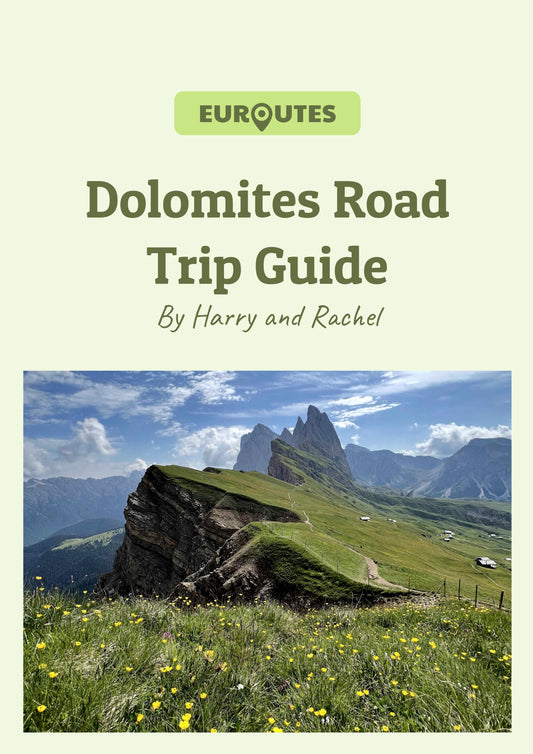
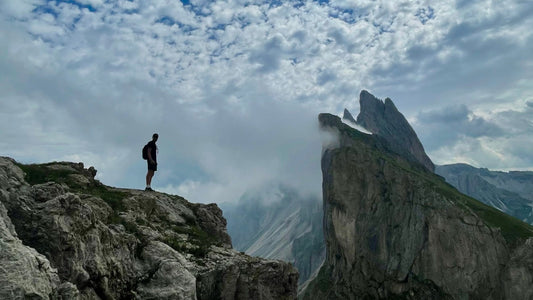
Up early for the morning's hike. Seceda is reached by cable car from Ortisei and is one of the most recognisable views in the Dolomites, the jagged Fermeda Towers behind a ridge that drops away into the valley.
Alpe di Siusi is the alternative: Europe's largest alpine meadow, gentler walking, and a good option if you want something less dramatic but still spectacular.
We did both as we were in the Dolomites for longer than 5 days, so if you have more time to play with then this is definitely an option!
We were up early for the first cable car up to Seceda to beat the crows, it costs €37.00, the other option is hiking from the bottom but we chose to get the cable car and hike more once we were at the top.
In the afternoon, head out on the Sella Pass, part of what's often called the Great Dolomite Road. The drive itself is the point here: hairpin bends, huge views of the Sella and Sassolungo massifs, and plenty of places to pull over. You can also drive further to Lago di Carezza, a small lake known for its turquoise, mirror-like water. Worth knowing: you can't actually walk down to the water's edge (it's fenced off), so this is a photo-and-view stop rather than a lakeside picnic.

Day 3: Lago di Sorapis (morning), settle near Cortina (afternoon)
This is the day where the early start matters most. The hike to Lago di Sorapis takes a few hours each way and ends at one of the most striking lakes in the Dolomites, a bright, almost unreal turquoise against limestone peaks. Starting early means you avoid both the heat on the climb and the crowds at the lake itself.
You can either do an out and back trail or a more challenging circular route that will reward you with a more secluded hike. We chose the former and with time to sit and enjoy our lunch whilst we were there it probably took about 5/6 hours. The walk itself to Lake Sorapis is beautiful, snaking up through the forest, skirting some narrow ledges before finally reaching the incredible Lake. If you take your eyes of where your walking you will also be rewarded with views all the way over to the famous Tre Cime.
In the afternoon, make your way to the Cortina d'Ampezzo area, this becomes your base for the next two nights. Cortina itself is worth a wander in the evening: known as the "Queen of the Dolomites," it's got a more polished, alpine-town feel than some of the smaller villages.
Day 4: Tre Cime di Lavaredo
Another early start, and for good reason. Tre Cime is one of the most famous sights in the Dolomites, three distinctive peaks you can walk a loop around, but it's also one of the busiest, and there's a toll road up to the main car park at Rifugio Auronzo.
Here's the thing: if you arrive early enough, you don't need the toll road at all. You can park further down and walk up from the bottom, which avoids the toll cost entirely and means you're arriving on foot, ahead of the cars and coaches that start filling the toll road car park later in the morning.
The full loop around Tre Cime takes a few hours; if you're short on time or energy, the first stretch towards Forcella Lavaredo gives you the classic view without committing to the whole thing.
For more detail on the hikes, see our blog 3 beautiful hikes in the Dolomites.
Day 5: Lago di Braies, then heading out
Last one, and the same logic applies. Lago di Braies is one of the most photographed lakes in the Dolomites, and it gets extremely busy with parking restrictions in peak season. An early visit means you can walk around the lake (or take a rowing boat out) before it fills up.
If the weather is nice, then arriving for sunrise or sunset is even better!

What to Skip If You've Only Got 3 Days
If you're tighter on time, this same route compresses well. Skip the settle-in day, go straight into hiking from Day 1 and drop Lago di Carezza, since it's a bit out of the way and a photo stop rather than something that needs much time. That leaves you with: Seceda or Alpe di Siusi, Sella Pass (without the Carezza detour), Lago di Sorapis, and Tre Cime, still a proper taste of the Dolomites, just tighter.
If You've Got 7 Days: What We'd Add
With two extra days, we'd add Geisler Alm, another impressive mountain range in Val di F`unes. Follow the Adolf Munkel trail which runs all along the Odle mountain range. For the other day, build in one genuinely chill day by a lake, like Lago di Landro. After a few days of early starts and hikes, a slower day where the plan is just "sit by a lake" is worth its place in a longer itinerary.

Get the full Dolomites road trip guide
Get our Italian Dolomites road trip guide, digital map and suggested road trip route.
- 90+ locations
- Interactive map with every stop pinned
- Up to 1 month road trip route
Guide price
£11.99
The Best Lakes in the Dolomites
A quick note on the lakes in this itinerary, because expectations matter here: none of these are swimming lakes. They're stunning to look at, walk around, or photograph, but don't plan on getting in.
Lago di Carezza - small, turquoise, mirrors the Latemar mountains behind it. Fenced off, so it's a viewpoint rather than a place to sit by the water.
Lago di Sorapis - a vivid, almost unreal turquoise, reached via a proper hike rather than a drive-up. The colour is the reward for the effort.
Lago di Braies - the most accessible of the three, with a path around the whole lake and rowing boats available if you want to get out on the water (just not in it).
Travelling the Dolomites with a Dog
We didn't have our dog with us on this particular trip, but we do now travel with her and have hiked with her in other parts of the Alps and Europe, so here's what we'd plan for based on that experience, rather than route-specific testing.
Cable cars and dogs: rules vary by operator, some allow dogs (often muzzled or in a carrier for smaller dogs), others don't so it's worth taking a muzzle with you just in case.
Livestock on alpine trails: cows and sheep grazing on open trails are common across the Alps, and the Dolomites are no exception, a dog off-lead near livestock can cause problems for both. Keep dogs on a lead in grazing areas.
Heat and terrain: rock and exposed paths can get hot fast in summer sun, the same "hike early" logic that helps you also helps your dog, with cooler ground and less exposure during the climb.
Tre Cime and Braies specifically: both are extremely busy spots in peak season, which can be stressful for a dog even if they're allowed. If you're travelling with a dog, the early-start approach in this itinerary matters even more here.
This itinerary gives you five days that cover the highlights properly. The Dolomites Road Trip Guide goes further, it's the full route we did ourselves, with every location pinned on an interactive map, our actual van life and overnight spots, and the alternatives and overflow options for when a cable car's shut or a car park's already full. If five days leaves you wanting more, or if you'd rather have everything mapped out before you go, it's the next step.